
The Importance of Precision in Aerospace Manufacturing
In the aerospace industry, precision manufacturing is paramount due to the significant impact it has on safety, performance, and regulatory compliance. The stringent requirements inherent in this field necessitate the adoption of advanced techniques, with 5-axis CNC machining emerging as a crucial method for achieving the high levels of accuracy demanded. Each component must meet exact specifications, as even minor deviations can lead to catastrophic failures.
Safety is the foremost consideration in aerospace manufacturing, where components must endure extreme conditions, from high speeds to significant temperature fluctuations. Any inaccuracies can compromise structural integrity, thereby risking the lives of passengers and crew. By employing 5-axis CNC machining, manufacturers can produce intricate designs that enhance safety measures while reducing human error. This advanced technology allows for more complex geometries, which are often essential for optimizing performance and aerodynamics.
Furthermore, precision in aerospace components directly influences their performance. High-quality manufacturing leads to improved operational efficiency, fuel consumption, and reduced emissions. Aerospace manufacturers are increasingly pressured to innovate and adhere to environmental standards, making precision machining not just a necessity but a competitive advantage.
Compliance with regulatory standards is another critical factor in the aerospace industry. Organizations like the Federal Aviation Administration (FAA) and the European Union Aviation Safety Agency (EASA) impose strict guidelines that must be followed to ensure quality and safety in production processes. Failure to meet these standards can disrupt production schedules, result in financial losses, and tarnish a company’s reputation. By utilizing 5-axis CNC machining, manufacturers can maintain consistent quality, ensuring compliance with various regulations while producing components that meet the industry’s high expectations.
In conclusion, the importance of precision in aerospace manufacturing cannot be overstated. Implementing 5-axis CNC machining not only helps avoid costly errors but also enhances overall accuracy, leading to safer and more efficient aircraft components. This alignment with rigorous industry standards further solidifies the necessity of advanced manufacturing techniques in the aerospace sector.
Understanding 5-Axis CNC Machining and Its Advantages
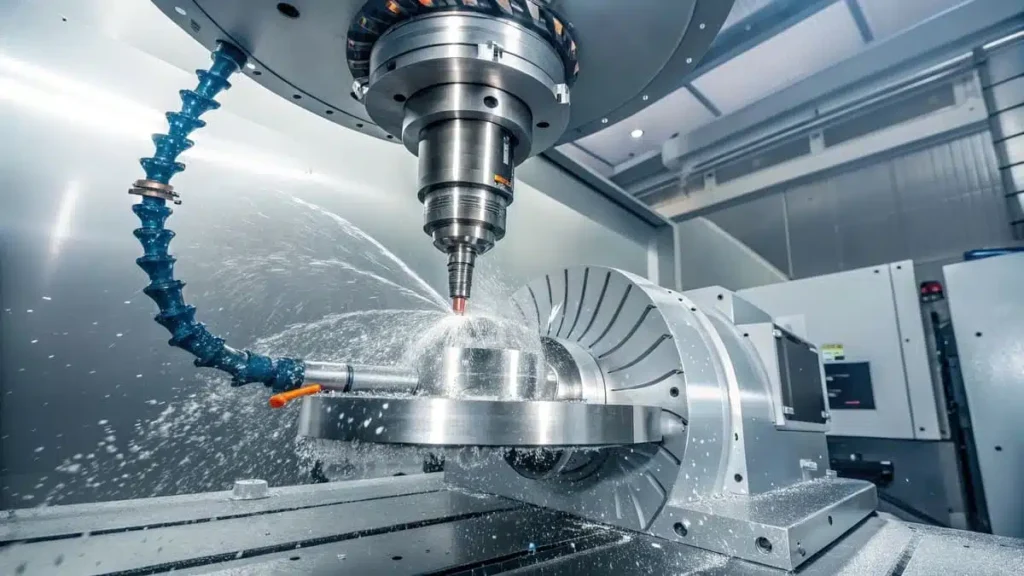
5-axis CNC machining is a sophisticated manufacturing process that utilizes five different axes to create complex components with high precision. By allowing tools to move along multiple axes simultaneously, this method significantly enhances the machining capabilities compared to traditional 3-axis systems. In the context of the aerospace industry, where component precision is paramount, 5-axis CNC machining is a game changer.
One of the primary advantages of 5-axis CNC machining for aerospace applications is its enhanced accuracy. The integrated movements minimize errors during machining, leading to components that meet stringent tolerances. Because aerospace parts must often fit together with high precision in machinery or aircraft, the ability to maintain such accuracy through complex operations is invaluable.
Additionally, 5-axis CNC machining enables the production of intricate geometries that are challenging to achieve using conventional methods. This capability is particularly relevant for aerospace components, which may include complex curves, cavities, and features that are critical for performance. The flexibility afforded by this technology allows manufacturers to streamline their processes by reducing the need for multiple setups, thereby saving time and reducing the risk of errors.
The quality of surface finishes is another significant advantage of 5-axis machining. With the ability to approach the workpiece from various angles, manufacturers can produce parts with superior textures and finishes. This results in components that not only meet aesthetic standards but also contribute to improved aerodynamic efficiency—a crucial requirement in aerospace engineering.
Real-world applications of 5-axis CNC machining in aerospace are abundant. For instance, leading aerospace manufacturers have employed this technology to produce engine components such as turbine blades that require precision and complex geometries. Additionally, the aerospace sector has witnessed significant improvements in the production of structural components, enhancing overall performance and durability. Therefore, choosing 5-axis CNC machining can lead to substantial advancements in the aerospace manufacturing arena.
Common Costly Errors in Aerospace Machining Processes
In the realm of aerospace manufacturing, precision is paramount. However, numerous costly errors can undermine this precision, particularly in 5-axis CNC machining. Understanding these errors is essential for engineers and manufacturers striving to enhance operational efficiency and minimize waste.
One significant issue is tool wear. During the machining process, tools can degrade due to prolonged use and exposure to high forces, leading to diminished cutting abilities. This wear can result in parts that do not meet aerospace specifications, necessitating rework or scrap, both of which are expensive. Regular monitoring of tool condition and implementing a suitable replacement schedule can mitigate these risks.
Another common error stems from incorrect alignment. In 5-axis CNC operations, alignment is critical for ensuring that the machine operates accurately across multiple axes. Even a slight misalignment can lead to geometric inaccuracies, producing components that fail to adhere to the stringent requirements of aerospace applications. Employing advanced alignment techniques and regular calibration checks can help rectify these issues.
Programming mistakes pose yet another challenge. The complexities involved in generating the precise instructions for a 5-axis CNC machine can lead to errors that impact the cutting process. For example, incorrect tool paths or feed rates can compromise both surface finish and dimensional accuracy. Comprehensive training for operators and a robust quality assurance process are vital in minimizing the likelihood of programming missteps.
In summary, awareness of common costly errors in 5-axis CNC machining is crucial for aerospace manufacturers aiming to enhance precision and reduce costs. Addressing issues related to tool wear, alignment, and programming errors can significantly improve outcomes and support the overall goal of precision manufacturing in the aerospace sector.
Strategies to Improve Precision and Minimize Errors in 5-Axis CNC Machining
In the ever-evolving aerospace industry, the demand for precision and efficiency remains paramount. Utilizing 5-axis CNC machining presents numerous advantages, particularly for components that require intricate designs. However, to mitigate costly errors and refine accuracy by 40%, aerospace manufacturers must employ several key strategies.
First and foremost, the implementation of advanced software deployment plays a critical role in enhancing machining precision. Modern CAM (Computer-Aided Manufacturing) systems are capable of simulating machining paths and detecting potential errors before actual machining occurs. By utilizing these sophisticated software tools, operators can visualize the end product, enabling them to make informed adjustments in real-time.
Routine maintenance checks of CNC machines also cannot be overlooked. Regularly scheduled inspections ensure that critical components are functioning optimally, which significantly reduces the likelihood of malfunctions that can lead to machining errors. Manufacturers should adopt a proactive approach in maintaining their CNC equipment, investing in preventive maintenance schedules to preempt operational disruptions.
An equally important aspect is operator training. A skilled workforce that comprehends both the machine’s capabilities and limitations is essential. Continuous education and training programs should be developed to keep operators informed about the latest technologies and practices, including the intricacies of 5-axis CNC machining. Enhanced operator proficiency directly contributes to improved precision and reduced error rates.
Finally, employing real-time monitoring techniques can greatly aid in identifying issues during the machining process. Integrated sensors and feedback loops provide instantaneous data about the machine’s performance, allowing operators to promptly address any anomalies that arise. Such technological interventions help maintain high standards of precision throughout the fabrication process.
By implementing these strategies, aerospace manufacturers can navigate the complexities of 5-axis CNC machining, avoid costly errors, and ultimately improve machining precision significantly.